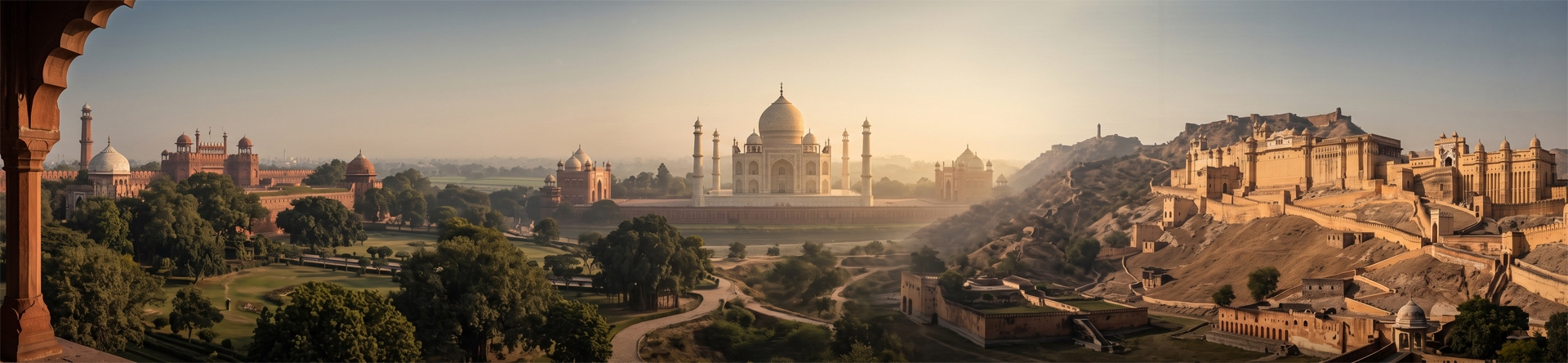
The Golden Triangle is where many journeys through India begin. Connecting Delhi, Agra and Jaipur, this classic route brings together three cities with completely different personalities: the layered history of Delhi, the Mughal architecture of Agra and the forts, palaces and colourful streets of Jaipur.
What makes Golden Triangle India particularly appealing is not simply the number of famous monuments packed into the route. It is how much the experience changes over a relatively manageable distance. One morning you can be walking through the lanes of Old Delhi, the next you may be standing in front of the Taj Mahal, and a few days later you can be looking across the Aravalli hills from Amber Fort.
For a first visit to northern India, few itineraries are as practical. Delhi, Agra and Jaipur are well connected by road, and a private car with a professional driver allows the journey to be planned around your own pace. Five days can cover the essentials, six or seven days feels more comfortable, and a longer itinerary gives you time to add Ranthambore, Udaipur or another Rajasthan destination.
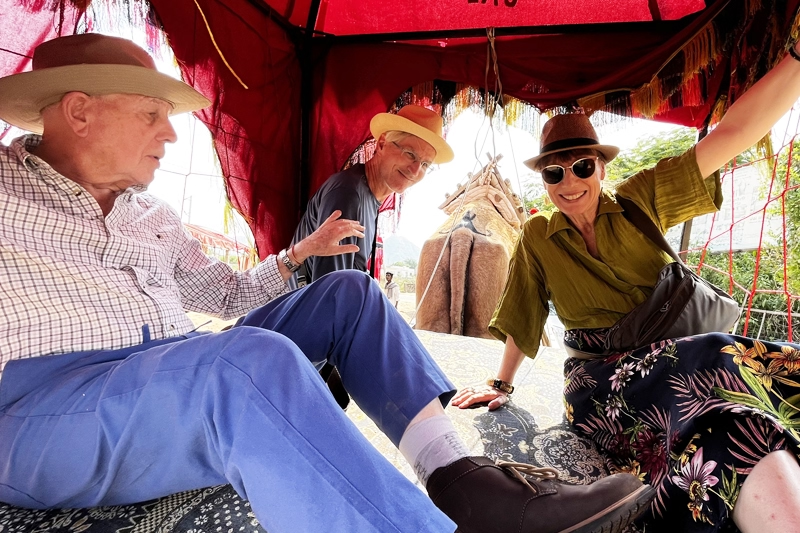

What is the Golden Triangle in India?
The Golden Triangle is a popular travel circuit linking Delhi, Agra and Jaipur. If you look at the three cities on a map, their positions roughly form a triangle, which explains the name.
Delhi normally acts as the starting and finishing point because it is a major international gateway. From Delhi, travellers continue south towards Agra for the Taj Mahal and other Mughal monuments before travelling west to Jaipur, the capital of Rajasthan. Jaipur then connects back towards Delhi.
The route works because each destination contributes something different. Delhi provides centuries of history alongside the energy of a modern capital. Agra is closely associated with the Mughal Empire and contains some of India’s best-known architecture. Jaipur introduces Rajasthan through royal palaces, hill forts, bazaars and traditional crafts.
A basic Delhi Agra Jaipur itinerary can be completed in five days, but that usually involves fairly full sightseeing days. Six or seven days provides a better balance between sightseeing, road journeys and free time.
Delhi → Agra → Jaipur → Delhi is the classic route. Around six or seven days is ideal for travellers who want to see the major attractions without turning every day into a race.
Why is the Golden Triangle India route so popular?
The Golden Triangle has remained popular because it offers an unusually concentrated introduction to northern India. You do not need to take several domestic flights, yet the route includes major UNESCO-listed architecture, bustling markets, royal heritage, regional food and some of India’s most recognisable landmarks.
It is also relatively easy to customise. Travellers with limited time can keep the journey to Delhi, Agra and Jaipur. Those with a few extra days can add Ranthambore for wildlife, while a longer Rajasthan journey can continue from Jaipur towards Jodhpur or Udaipur.
The route works for couples, families, senior travellers, photographers and first-time visitors because the schedule can be adjusted. A private tour does not have to follow the same timetable for everyone.
Another advantage is the range of accommodation. Delhi has sophisticated city hotels, Agra offers properties with convenient access to the Taj Mahal, and Jaipur has everything from modern luxury hotels to heritage properties inspired by Rajasthan’s royal architecture.
How many days are enough for the Golden Triangle India?
The right number of days depends on how deeply you want to explore each city.
4 days: Possible, but rushed. This works mainly for travellers with very limited time who are comfortable with early starts and full sightseeing days.
5 days: Enough for the major Delhi, Agra and Jaipur attractions, although there will still be limited free time.
6 days: One of the best options for a first Golden Triangle trip. It gives each destination more breathing room while keeping the itinerary compact.
7 days: Ideal if you prefer a slower pace, want more time in Delhi or Jaipur, or would like space for shopping and local experiences.
8 to 10 days: Suitable if you want to add Ranthambore or another nearby destination.
If comfort is important, avoid judging an itinerary only by how many attractions are included. Hotel changes, road journeys and sightseeing all take time. A six-day private journey can often feel more rewarding than a four-day itinerary containing exactly the same cities.
Best Golden Triangle India itinerary for first-time visitors
A six-day route is a particularly good starting point because it covers the main sights without requiring constant hotel changes beyond the three core destinations.
Day 1: Arrive in Delhi
Arrive in Delhi and transfer privately to your hotel. If you have travelled internationally, keeping the first day light is usually sensible.
Depending on your arrival time, you might take a relaxed drive through parts of New Delhi, enjoy dinner at the hotel or simply rest. Trying to begin a full sightseeing programme immediately after a long flight often makes the first day unnecessarily tiring.
Day 2: Explore Old and New Delhi
Your first full day introduces two very different sides of India’s capital.
Old Delhi is dense, energetic and historic. Jama Masjid stands close to the narrow commercial lanes around Chandni Chowk, where markets specialise in everything from spices and fabrics to jewellery and wedding goods.
A rickshaw ride through part of the old city can provide a different perspective on streets that are difficult to understand from inside a car.
New Delhi feels noticeably more open. Depending on your interests and available time, sightseeing can include Humayun’s Tomb, Qutub Minar, India Gate and drives through the government district.
Do not try to see every Delhi monument in a single day. Choosing a balanced group of highlights generally creates a much better experience.
Day 3: Delhi to Agra
After breakfast, travel privately from Delhi to Agra. Modern highways have made this one of the more straightforward road journeys on the Golden Triangle.
After arriving and checking into your hotel, visit Agra Fort. The fort is more than a secondary attraction beside the Taj Mahal. Its palaces, courtyards and defensive walls provide important context for understanding Mughal history in Agra.
If time and weather allow, the evening can be kept for a viewpoint, local market or relaxed hotel stay.
Day 4: Taj Mahal and drive to Jaipur
Begin early for the Taj Mahal. Morning light can be beautiful, and temperatures are often more comfortable than later in the day.
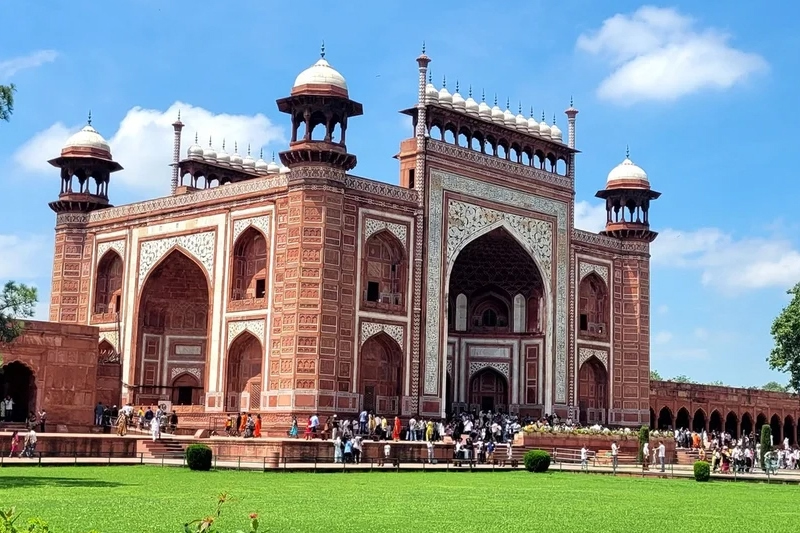
The first view through the main gateway is one of those travel moments that photographs rarely prepare you for. Take time to walk through the gardens rather than rushing directly towards the central platform.
After returning to the hotel for breakfast, continue towards Jaipur. Depending on your itinerary, the journey may include a stop at Fatehpur Sikri, the former Mughal capital outside Agra.
Arrive in Jaipur later in the day and check into your hotel.
Day 5: Full-day Jaipur sightseeing
Begin with Amber Fort, located outside the central city. The fort complex combines courtyards, gateways, halls and hilltop views.
Later, continue towards Jaipur’s old city for City Palace and Jantar Mantar. Hawa Mahal can be viewed from the street, although its famous façade is only one part of Jaipur’s architectural character.
Leave some time for the markets if textiles, jewellery, crafts or block printing interest you. Jaipur is a city where shopping can be an enjoyable cultural experience rather than simply a scheduled souvenir stop.
Day 6: Jaipur to Delhi
After breakfast, return to Delhi by private vehicle or continue according to your onward travel arrangements.
If your international flight departs late at night, the schedule can sometimes be coordinated with the road journey. For an early flight, an additional night in Delhi is usually more comfortable.
Related itinerary: 6 Days Grand Luxury Golden Triangle Tour
Delhi: where the Golden Triangle journey begins
Delhi can feel overwhelming at first because it is not one single historic city. Different rulers built and rebuilt settlements across the area over centuries, leaving monuments from several periods alongside modern neighbourhoods and government districts.
That complexity is precisely why Delhi deserves proper sightseeing time instead of being treated only as an airport stop.
Old Delhi and Chandni Chowk
Old Delhi is one of the most atmospheric parts of the Golden Triangle. The area around Chandni Chowk is busy, crowded and full of small businesses operating in lanes that have been commercial centres for generations.
Walking and rickshaw travel often work better than trying to explore entirely by car. A private guide can also help you understand what you are seeing rather than simply moving through the crowds.
Jama Masjid
Jama Masjid is one of Delhi’s best-known Mughal-era landmarks. Its large courtyard and position near Old Delhi make it a natural addition to a heritage walk through this part of the city.
Because it remains a functioning place of worship, visitors should dress respectfully and follow local instructions.
Humayun’s Tomb
Humayun’s Tomb is particularly interesting before visiting the Taj Mahal because it helps illustrate the development of Mughal garden-tomb architecture.
The symmetrical gardens, red sandstone and white marble details create a calmer experience than the commercial streets of Old Delhi.
Qutub Minar
Qutub Minar and the surrounding archaeological complex represent a different period of Delhi’s history. The tower is the most immediately recognisable structure, but the wider complex deserves attention as well.
India Gate and New Delhi
Driving through New Delhi reveals broad avenues and monumental government architecture that contrasts sharply with Old Delhi.
India Gate is one of the most recognisable landmarks in this part of the city and is often included as a drive-by or short sightseeing stop.
If your schedule allows, spend two nights in Delhi. One full sightseeing day provides a useful introduction, while an additional day lets you explore the capital at a much easier pace.
Agra: much more than the Taj Mahal
Agra is often reduced to a single photograph of the Taj Mahal, but its history extends well beyond that monument.
During the Mughal period, Agra was one of the most important imperial centres in northern India. The Taj Mahal, Agra Fort and other monuments are connected by the stories of the rulers and families who shaped the city.
Taj Mahal
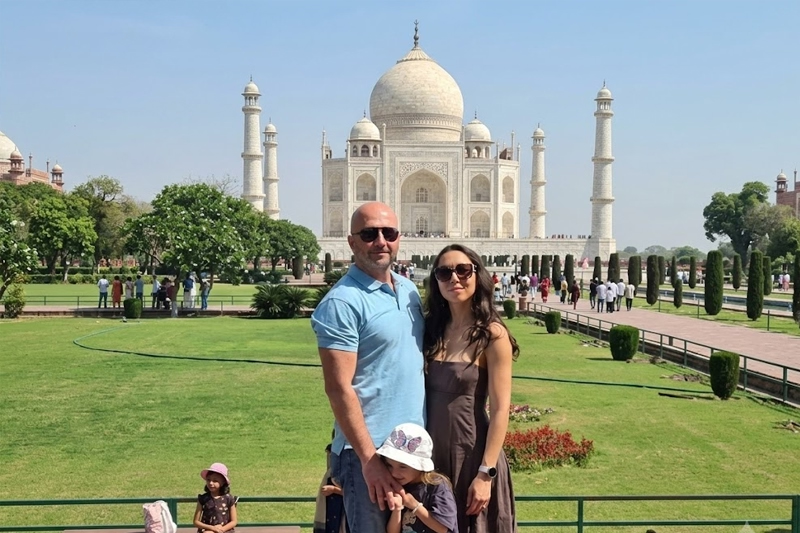
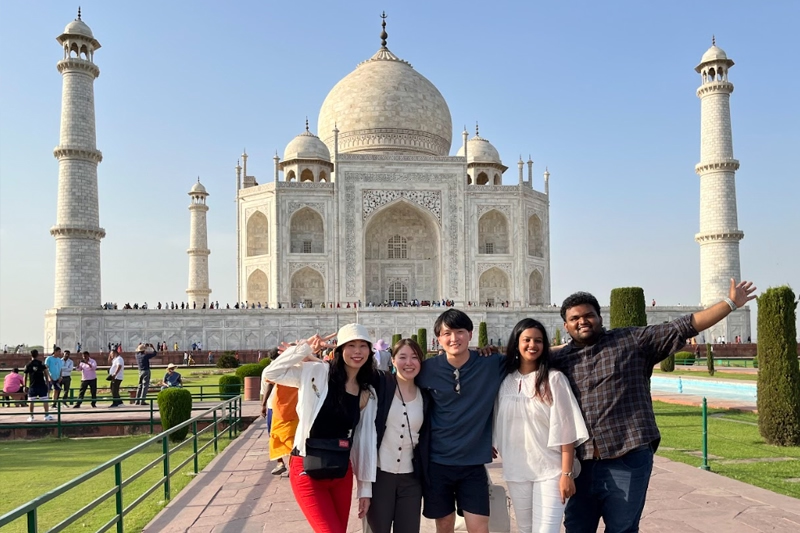
The Taj Mahal is the centrepiece of most Golden Triangle India tours. Built by Mughal emperor Shah Jahan in memory of Mumtaz Mahal, the monument is celebrated for its white marble, symmetry, decorative work and carefully planned gardens.
Seeing it in person is different from seeing the familiar front-facing photograph. The marble changes subtly with the light, while decorative details become more visible as you move closer.
An early visit works well for many travellers. However, your schedule should consider the monument’s opening rules and weekly closure when planning the wider itinerary.
Agra Fort
Agra Fort should not be skipped simply because the Taj Mahal is more famous. The large fortified complex contains royal halls, courtyards and residential areas associated with several Mughal emperors.
Parts of the fort also offer views towards the Taj Mahal, creating a visual connection between two of Agra’s most important monuments.
Fatehpur Sikri
Fatehpur Sikri lies outside Agra and can fit naturally into the road journey towards Jaipur.
The former Mughal capital contains palaces, courtyards and religious structures that make it much more than a quick roadside stop. Allow enough time to explore rather than adding it simply to increase the number of monuments in the itinerary.
Learn more about the city on our Agra destination guide.
Jaipur: forts, palaces and Rajasthan culture
Jaipur completes the classic Golden Triangle and often becomes the city where travellers wish they had scheduled an extra night.
The capital of Rajasthan offers monumental architecture, hill forts, royal residences, traditional markets, jewellery, textiles and a strong craft tradition.
Amber Fort
Amber Fort sits in the hills outside central Jaipur and is usually visited in the morning. Its scale becomes apparent as you approach the complex from below.
Inside are courtyards, gateways, halls and decorated spaces that reveal different stages of the palace’s history. A guide can help connect these areas rather than treating the fort as a sequence of photo stops.
City Palace
City Palace lies in the historic centre of Jaipur and remains one of the city’s major attractions. The complex combines courtyards, museums and royal architecture.
Visitors particularly interested in design and photography may want more time here than a standard sightseeing schedule allows.
Jantar Mantar
Jantar Mantar is located close to City Palace and contains large astronomical instruments. Without explanation, the structures can appear abstract; with a knowledgeable guide, their purpose becomes far more interesting.
Hawa Mahal
The pink façade of Hawa Mahal has become one of Jaipur’s most recognisable images. Many travellers stop across the street for the classic view before continuing into the old city.
The surrounding streets are busy, so combining Hawa Mahal with City Palace, Jantar Mantar and nearby markets is usually efficient.
Jaipur markets and crafts
Jaipur’s craft traditions are part of its appeal. Textiles, gemstones, jewellery, pottery and block-printed fabrics are widely available.
If shopping interests you, ask for time to browse rather than accepting a rushed visit to whichever shop happens to be included in a standard itinerary.
Read more about the Pink City on our Jaipur destination page.
Delhi to Agra to Jaipur: how to travel
One reason the Golden Triangle works so well is that the three cities can be connected comfortably by road.
Private car and driver
For travellers prioritising comfort and flexibility, a private Golden Triangle tour with a dedicated vehicle is one of the easiest options.
Your luggage stays with the vehicle during transfers, departures can be coordinated with your itinerary and sightseeing can be adjusted more easily than on a fixed group schedule.
The driver handles transport, but a chauffeur is not necessarily the same person as your sightseeing guide. Local guides can join in Delhi, Agra and Jaipur to explain monuments and history.
Train travel
Rail can be useful between certain Golden Triangle cities, particularly for travellers who want to experience India’s train network or reduce some road time.
However, train travel also requires transfers between hotels and stations, luggage handling and coordination around fixed departure times.
Flights
Flights are generally unnecessary for the basic Delhi–Agra–Jaipur circuit. Road or rail connections usually make more sense.
Flights become useful when extending the itinerary towards destinations much farther away, such as Varanasi, Mumbai or South India.
Best time to visit the Golden Triangle India
The Golden Triangle can be visited during much of the year, but the experience changes considerably with the seasons.
October to March
This is a popular period for Delhi, Agra and Jaipur because temperatures are generally more comfortable for outdoor sightseeing.
December and January mornings can be cool, and fog sometimes affects northern India. Carrying layers is useful because mornings and evenings may feel quite different from the afternoon.
April to June
Temperatures rise significantly during late spring and early summer. Sightseeing is still possible, but early starts, hydration and breaks during the hottest part of the day become more important.
Hotels may offer different seasonal pricing, making this period interesting for travellers comfortable with heat.
July to September
The monsoon can bring rain and humidity, but it also changes the landscape. Jaipur and surrounding areas can appear greener than during the dry months.
Rain does not necessarily continue all day, but plans should remain flexible.
October through March is generally the easiest period for travellers who want comfortable sightseeing weather across Delhi, Agra and Jaipur.
Where to stay on a Golden Triangle tour
Accommodation can significantly influence how the journey feels. A good hotel is not simply somewhere to sleep between monuments; location, service and atmosphere can improve the overall pace of the itinerary.
Hotels in Delhi
Delhi offers everything from international luxury hotels to smaller boutique properties. Your choice should consider airport access, sightseeing plans and the neighbourhood where you want to stay.
For a short visit, convenience often matters more than choosing the most elaborate property on the edge of the city.
Hotels in Agra
Agra stays are frequently only one or two nights, so location can be especially useful. Some premium properties are positioned with convenient access to the Taj Mahal area.
If you plan an early morning monument visit, reducing unnecessary transfer time can make the day much easier.
Hotels in Jaipur
Jaipur offers one of the widest choices on the Golden Triangle. Modern luxury hotels sit alongside heritage-inspired properties and historic residences.
Travellers looking for a more Rajasthan-focused experience often enjoy staying somewhere with local architecture and design, while families may prioritise larger rooms, gardens or a swimming pool.
What should a private Golden Triangle tour include?
Inclusions vary between packages, so read your confirmed itinerary carefully. A well-organised private tour may include:
- Private air-conditioned vehicle for transfers and sightseeing
- Professional chauffeur
- Airport pickup and drop-off
- Hotel accommodation according to the selected category
- Daily breakfast according to the hotel meal plan
- Private local guides in Delhi, Agra and Jaipur
- Pre-planned sightseeing programme
- Assistance during the journey
- Optional experiences depending on the itinerary
Check separately whether monument tickets, lunches, dinners, gratuities, train tickets and optional activities are included.
Golden Triangle India for couples
The route works particularly well for couples because it combines famous sightseeing with opportunities for memorable hotels and slower evenings.
Agra naturally has a romantic association because of the Taj Mahal, while Jaipur provides heritage hotels, rooftop dining and palace architecture.
Couples with seven or eight days should consider using the additional time for a more relaxed Jaipur stay rather than adding another city simply to make the itinerary longer.
Golden Triangle India for families
Families can enjoy the Golden Triangle, but the sightseeing schedule should be realistic for the ages of the children travelling.
A full day containing several monuments, long drives and evening activities may look efficient on paper but can become tiring.
Private transport is particularly useful because families can adjust stops, meal times and departures. Hotels with larger rooms or pools can also make afternoons more enjoyable.
Golden Triangle India for senior travellers
Senior travellers often benefit from a six- or seven-day itinerary rather than the shortest possible version.
The additional time reduces pressure to begin every morning very early and makes it easier to include breaks between monuments.
Mobility requirements should be discussed before travel because historic forts and monuments can involve uneven surfaces, steps and considerable walking.
A private vehicle also reduces the need to handle luggage repeatedly or coordinate transport independently between cities.
What to wear on a Golden Triangle India tour
Comfortable clothing and walking shoes are useful because sightseeing days can involve several hours outdoors.
During cooler winter months, mornings and evenings may require an extra layer even when afternoons are pleasant.
For religious sites, modest clothing is appropriate. Some places may require shoes to be removed or heads to be covered according to local customs.
Sun protection is valuable throughout much of the year, particularly during longer outdoor visits to forts and archaeological complexes.
Food on the Delhi Agra Jaipur route
Food changes as you move around the Golden Triangle, and meals can become an important part of the journey rather than simply a break between monuments.
Delhi offers enormous variety, from traditional North Indian cooking to modern restaurants representing cuisines from across the country.
Agra has its own local specialities, while Jaipur provides an introduction to Rajasthan’s distinctive food traditions.
If you have dietary requirements, communicate them before the journey. Vegetarian food is widely available, and good hotels and established restaurants can usually accommodate many common dietary needs when informed in advance.
Street food is appealing, but first-time visitors should choose carefully. A guided food experience can be a more comfortable way to explore local flavours.
Common Golden Triangle planning mistakes
The biggest mistake is trying to make the itinerary too short. Delhi, Agra and Jaipur may form a convenient triangle, but sightseeing and road travel still require time.
Another common mistake is using Delhi only as an arrival point. The capital contains enough history to justify at least one proper sightseeing day.
Travellers also sometimes schedule Jaipur too tightly. Amber Fort alone deserves time, and combining it with City Palace, Jantar Mantar, markets and other stops creates a full day.
Hotel location is another factor that is easy to overlook. Saving a small amount on accommodation can be less valuable if you then spend much more time driving through city traffic.
The best Golden Triangle itinerary is not the one that includes the most stops. It is the one that gives Delhi, Agra and Jaipur enough time to feel different.
How to extend your Golden Triangle India tour
One of the strongest advantages of the Golden Triangle is how easily it can become the foundation for a longer India itinerary.
Golden Triangle with Ranthambore
Ranthambore is one of the most natural extensions. The national park can be incorporated between Agra and Jaipur, creating a route that combines architecture with wildlife.
Two nights is preferable if safari is important to you because wildlife sightings are never guaranteed on a single drive.
Explore the destination in more detail on our Ranthambore travel guide.
Golden Triangle with Udaipur
Udaipur is an excellent extension for travellers who want more Rajasthan without going all the way into the western desert.
The lakes, palaces and slower atmosphere contrast nicely with Jaipur. Two or three nights gives you time for City Palace, Lake Pichola and a more relaxed end to the journey.
See our Udaipur destination guide when planning the extension.
Golden Triangle with Jodhpur
Jodhpur brings one of Rajasthan’s most dramatic forts into the itinerary. Mehrangarh Fort rises above the old city and is reason enough to include the destination.
Jodhpur works particularly well as part of a longer Jaipur–Jodhpur–Udaipur route.
Golden Triangle with Varanasi
Varanasi adds a completely different cultural dimension. Rather than continuing entirely by road, flying is often more practical when connecting distant destinations.
Morning boat rides, ghats, old lanes and religious traditions make Varanasi very different from the forts and palaces of Rajasthan.
Golden Triangle with Rajasthan
Travellers with around two weeks can use Jaipur as the gateway to a deeper Rajasthan journey.
Jodhpur, Jaisalmer and Udaipur can be combined into a longer private road itinerary, while Ranthambore can add wildlife along the way.
For a larger Rajasthan journey, see the 14 Days Grand Rajasthan Odyssey.
5-day vs 6-day vs 7-day Golden Triangle tour
| Duration | Suggested Route | Travel Pace | Best For |
|---|---|---|---|
| 5 Days | Delhi – Agra – Jaipur | Active | Travellers with limited time |
| 6 Days | Delhi – Agra – Jaipur | Balanced | Most first-time visitors |
| 7 Days | Delhi – Agra – Jaipur | Relaxed | Couples, families and luxury travel |
| 8–10 Days | Delhi – Agra – Ranthambore – Jaipur | Balanced | Heritage and wildlife |
If you only have five days, our 5 Days Classic Luxury Golden Triangle Tour provides a compact route through all three cities.
For a more comfortable first visit, the 6 Days Grand Luxury Golden Triangle Tour gives the journey additional breathing room.
Is a private Golden Triangle tour worth it?
For many travellers, yes—particularly if comfort and flexibility are priorities.
On a group itinerary, departure times, sightseeing duration and meal stops generally have to work for everyone. Private travel allows the day to be shaped more closely around you.
If you want extra time photographing Amber Fort, the schedule can often accommodate it. If you are tired after Agra and want a quieter evening in Jaipur, you are not committed to a group programme.
Private transport is also convenient when travelling with luggage. Your vehicle remains dedicated to your journey during the road sectors instead of requiring separate transfers at every stage.
The value becomes even clearer for families, couples and senior travellers who may not want identical sightseeing schedules.
Luxury Golden Triangle India tours
A luxury Golden Triangle India tour should involve more than simply replacing standard hotels with expensive ones.
Luxury begins with planning. Airport transfers should be coordinated properly, driving days should be realistic and hotels should suit the itinerary rather than being chosen solely by brand name.
Private guides can make Delhi’s history easier to understand, while a well-positioned hotel in Agra can simplify an early Taj Mahal visit. In Jaipur, a heritage-style stay can become part of the Rajasthan experience.
Free time matters too. If every minute is filled with sightseeing, there is little opportunity to enjoy the hotel, browse a market or simply sit over dinner without checking the next departure time.
That is why the best luxury itineraries often look less crowded than cheaper high-speed packages.
Golden Triangle India tour planning checklist
- Choose five, six or seven days depending on your preferred pace.
- Spend at least one full sightseeing day in Delhi.
- Plan the Taj Mahal around current opening arrangements.
- Include Agra Fort rather than visiting only the Taj Mahal.
- Allow a full sightseeing day for Jaipur.
- Consider Fatehpur Sikri while travelling between Agra and Jaipur.
- Select hotels based on location as well as category.
- Use a private chauffeur if flexibility is important.
- Book guides for major historic sightseeing.
- Add Ranthambore only if you have enough time for the safari experience.
- Use flights when extending the journey to distant regions.
- Avoid unnecessary one-night stops.
Frequently asked questions about Golden Triangle India
Plan your Golden Triangle India journey
The Golden Triangle remains one of the strongest introductions to India because Delhi, Agra and Jaipur never feel like variations of the same destination. Delhi is layered and energetic, Agra brings Mughal architecture into focus, and Jaipur opens the door to Rajasthan.
Five days is enough when time is limited. Six days offers a better balance for most first-time travellers, while seven days allows the route to breathe. With additional time, Ranthambore, Udaipur, Jodhpur or a wider Rajasthan itinerary can turn the classic triangle into a much deeper journey.
The key is not to fit as much as possible into the schedule. Choose the places you genuinely want to experience, allow realistic travel time and build the itinerary around your own pace.
Plan your private Golden Triangle India tour
Tell us your travel dates, preferred hotels and number of days. We can create a private Delhi, Agra and Jaipur itinerary around your interests and travel pace.
Plan Your Golden Triangle Tour