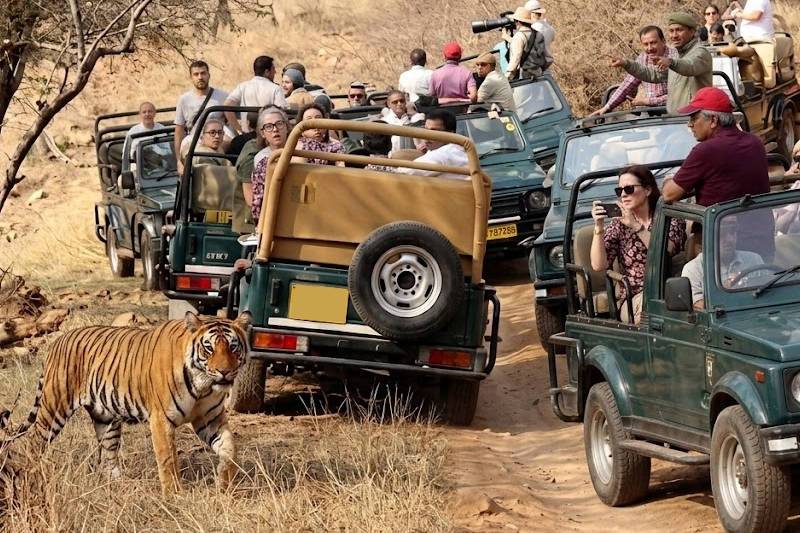
India’s wildlife experiences go far beyond spotting a tiger from a safari vehicle. The real journey begins before entering the forest: waking before sunrise at a jungle lodge, listening to alarm calls in the distance, following fresh tracks with an experienced naturalist and watching an entire landscape slowly come alive.
For travellers who want nature without giving up comfort, Luxury Wildlife Tours in India can combine carefully planned safaris with private transfers, characterful jungle lodges, experienced guides and enough time to appreciate each reserve rather than racing between destinations.
Ranthambore, Bandhavgarh, Kanha, Pench, Tadoba and Satpura each offer a different wildlife experience. Some are especially attractive to first-time tiger safari travellers, while others reward visitors interested in landscapes, birds, photography and a quieter understanding of the Indian wilderness.
This guide explains where to go, when to travel, how many safaris to plan and how to build a private wildlife itinerary around your interests. It also looks at practical combinations with Delhi, Agra, Jaipur and Rajasthan for travellers who want wildlife alongside India’s cultural highlights.
No ethical safari operator can guarantee a tiger sighting. Tigers and other animals move freely through natural habitats. A rewarding safari is about the forest, tracking, landscapes, birds and wildlife as a whole.
Why choose a luxury wildlife tour in India?
A wildlife journey can be one of the most memorable ways to experience India because it takes you away from the familiar monuments and into landscapes that operate on a completely different rhythm.
Early mornings replace busy city streets. Forest tracks replace highways. Instead of following a fixed sightseeing checklist, each safari develops according to weather, animal movement, recent tracks and information shared between guides.
Luxury in this setting does not simply mean an expensive room. The most valuable comforts are often logistical: a well-positioned lodge, reliable private transfers, knowledgeable naturalists, sensible safari planning and enough nights in each reserve to avoid feeling rushed.
A good private wildlife itinerary also understands that safari days can be tiring. Morning drives may begin before sunrise, and afternoon safaris can occupy much of the second half of the day. Filling every gap with additional activities often reduces rather than improves the experience.
That is why the best private wildlife tours in India balance activity with recovery. You should have time for breakfast after a morning drive, lunch at the lodge, a quiet afternoon when no safari is scheduled and evenings that are not automatically filled with another excursion.
What makes India special for tiger safaris?
The Bengal tiger is understandably the headline species for many visitors, but India’s wildlife reserves protect much broader ecosystems.
Depending on the region, a safari may also reveal leopards, sloth bears, wild dogs, deer, gaur, monkeys, crocodiles and a remarkable variety of birds. Even when a tiger remains hidden, the forest rarely feels empty when you know what to watch and listen for.
India’s reserves also differ dramatically in appearance. Ranthambore is known for dry forest, lakes and historic ruins. Kanha opens into broad meadows surrounded by sal forest. Bandhavgarh combines forested hills and grasslands, while Satpura offers a more varied style of wilderness experience.
This diversity makes it possible to design a wildlife journey around more than one objective. A first-time visitor may prioritise tiger country, while a photographer may prefer several days in one reserve. A repeat visitor might combine two parks with contrasting landscapes instead of trying to cover as many destinations as possible.
A great Indian safari is not simply a search for one animal. It is the anticipation of never knowing what may appear around the next bend.
Best tiger safari destinations in India
There is no single national park that is automatically “best” for every traveller. Accessibility, season, landscape, accommodation and the rest of your India itinerary all matter.
For a luxury private journey, the strongest choice is often the park that fits naturally into your wider route while still giving you enough time for multiple safari drives.
1. Ranthambore National Park – ideal for Rajasthan and Golden Triangle journeys
Ranthambore is one of the most convenient wildlife destinations for travellers already visiting northern India.
Its location in Rajasthan makes it possible to combine safari time with Delhi, Agra and Jaipur. This geographical advantage is important because many international travellers do not want their first India holiday to consist entirely of wildlife reserves.
The park’s landscapes also give it a distinctive visual identity. Dry forest, rocky terrain, lakes and historic structures create scenes that feel very different from the dense green image many travellers initially associate with Indian wildlife.
Tigers are the major attraction, but the park also supports deer, monkeys, crocodiles, birds and other wildlife.
The historic presence of Ranthambore Fort adds another layer to the destination. Even travellers who arrive primarily for safari often find that the relationship between wilderness and Rajasthan’s history makes the area particularly memorable.
For a first visit, plan at least two nights. Three nights is better if wildlife is one of the main reasons for your trip because it creates space for several safari drives.
Our Ranthambore destination guide provides additional information for travellers combining the park with a private Rajasthan journey.
Ranthambore works especially well for first-time India visitors, couples, families and travellers combining wildlife with Delhi, the Taj Mahal, Jaipur or a longer Rajasthan itinerary.
2. Bandhavgarh National Park – a classic Central India safari
Bandhavgarh is a major name in Indian tiger tourism and a natural candidate for travellers building a dedicated wildlife itinerary through Central India.
The landscape combines forest, grassland and hills, giving safari drives considerable visual variety.
For serious wildlife travellers, Bandhavgarh is best treated as a destination rather than a quick side trip. Getting there requires more planning than adding Ranthambore to a Golden Triangle itinerary, so staying long enough to justify the journey is important.
Three nights provides a useful starting point, while wildlife enthusiasts and photographers may prefer four nights or longer.
Multiple drives also give you time to become familiar with the landscape. After the first safari, landmarks start to feel recognisable, and you begin to understand why guides are checking certain tracks, water sources or forest edges.
This gradual familiarity is one of the pleasures of spending several days in a single reserve.
3. Kanha National Park – forests and open meadows
Kanha offers one of the most atmospheric safari landscapes in Central India.
Large meadows break up stretches of forest, creating beautiful early-morning scenes and opportunities to observe different wildlife habitats during a single drive.
Tigers are important, but Kanha rewards travellers who are interested in the broader ecosystem as well. Deer, gaur, monkeys, birds and other wildlife can make even a tiger-free drive rewarding.
The park works particularly well when paired with Bandhavgarh for a dedicated Central India wildlife journey.
Rather than spending one or two nights in each reserve, consider giving both destinations enough time. A longer stay improves the rhythm of the trip and reduces the pressure placed on each individual safari.
4. Pench National Park – a rewarding addition to Central India
Pench is another excellent choice for travellers who want to explore Central India beyond a single national park.
Its forest landscapes and wildlife make it suitable for both first-time safari visitors and travellers building a multi-reserve itinerary.
Pench can work particularly well when the overall route is designed around practical transfers rather than simply selecting parks from a list.
As with other reserves, the lodge and entrance area you choose matter. National parks can have multiple gates, and accommodation that looks close on a map may not necessarily be convenient for the safari access allocated to your permits.
This is one reason wildlife travel benefits from specialist planning before hotels are booked.
5. Tadoba-Andhari Tiger Reserve – for a dedicated wildlife journey
Tadoba has become increasingly well known among travellers interested in tiger safaris.
It is particularly appealing when wildlife is the central purpose of the trip rather than an addition to a Rajasthan or Golden Triangle holiday.
A stay of several nights gives you time for repeated drives and allows the reserve to become more than a single attempt at seeing a tiger.
When planning Tadoba, pay close attention to safari gates, lodge location, permit availability and transfer logistics.
A beautifully designed hotel loses much of its advantage if every safari requires unnecessarily complicated transfers to the correct entrance.
6. Satpura – for travellers who want a different wilderness experience
Satpura is worth considering when your idea of wildlife travel extends beyond searching for tigers.
The wider landscape and style of exploration can appeal to repeat safari visitors who want a quieter, more varied experience.
It is particularly suitable for travellers interested in nature, birdlife, landscapes and the feeling of being immersed in a wilderness environment.
For a first and only tiger-focused journey, you may decide to prioritise another reserve. For a broader wildlife holiday, however, Satpura can add excellent contrast.
Which tiger reserve is best for first-time visitors?
If you are visiting India for the first time and also want to see the Taj Mahal and Rajasthan, Ranthambore is usually the easiest wildlife reserve to integrate.
You can travel from Delhi to Agra, continue towards Ranthambore and then proceed to Jaipur. This creates a natural route rather than requiring a separate flight into Central India.
For travellers whose primary objective is wildlife, the answer changes. Bandhavgarh and Kanha can form the basis of a dedicated safari journey, while Pench, Tadoba or Satpura can be added depending on available days and transfer logistics.
The important question is therefore not simply, “Where can I see a tiger?”
Ask instead: How many days do I have? What else do I want to see in India? How many safari drives am I comfortable doing? Do I value photography, luxury lodge time, birds and landscapes as much as tiger sightings?
Those answers will produce a much better itinerary.
Ranthambore vs Bandhavgarh vs Kanha
| Reserve | Best For | Ideal Stay | Easy Combination |
|---|---|---|---|
| Ranthambore | First-time visitors, Rajasthan and tiger safari | 2–3 Nights | Delhi, Agra, Jaipur |
| Bandhavgarh | Dedicated tiger safari journeys | 3–4 Nights | Central India wildlife circuit |
| Kanha | Wildlife, landscapes and longer safari stays | 3–4 Nights | Bandhavgarh and Central India |
| Pench | Multi-park wildlife itineraries | 2–3 Nights | Central India |
| Tadoba | Wildlife-focused travellers | 3–4 Nights | Dedicated safari itinerary |
| Satpura | Nature, varied wilderness and repeat visitors | 3 Nights+ | Central India nature journey |
How many safaris should you book?
One safari is rarely enough if wildlife is genuinely important to you.
Animals move continuously, weather changes, and every drive explores the landscape under different conditions. A quiet morning can be followed by an afternoon filled with activity.
For a two-night stay, two or three drives may be possible depending on arrival and departure times. With three nights, you can usually build a more balanced programme around several drives.
Serious photographers and dedicated wildlife travellers often stay longer because they understand that time is the most useful advantage in nature.
However, more is not automatically better for everyone. Two safari drives every day can become tiring, particularly for families or travellers combining wildlife with a long cultural tour.
A luxury itinerary should match the number of drives to your energy level rather than simply filling every available safari slot.
Morning safari or afternoon safari: which is better?
Both can be worthwhile, and there is no universal rule that one always produces better wildlife sightings.
Morning safaris have a special atmosphere. The forest is cooler, the light changes rapidly after sunrise and the experience of leaving a lodge while it is still dark can feel like part of the adventure.
Afternoon drives are different. Temperatures and animal movement change as the day progresses, and the return journey near sunset can be beautiful.
If your schedule allows, include both morning and afternoon drives across your stay rather than choosing only one type.
Photographers may also appreciate experiencing the landscape under different light conditions.
Best time for tiger safaris in India
The ideal season depends partly on what you value most.
Many wildlife reserves operate seasonally, and individual zones or activities may be affected by local regulations and weather. Always confirm current opening arrangements for your actual travel dates.
October to February
The cooler months are attractive for travellers who want to combine safari with Rajasthan, Delhi and Agra.
Mornings can be cold in an open safari vehicle, especially in December and January. A jacket, layers and appropriate winter clothing can make a substantial difference.
Vegetation and conditions vary between reserves, but this period is popular because the overall weather is comfortable for a broader India itinerary.
March and April
Temperatures begin to rise, but these months can still be appealing for travellers focused strongly on wildlife.
Early mornings remain important, while afternoons become warmer.
Carry sun protection and plan your lodge time around the heat.
May and early summer
Conditions can become very hot.
Dedicated wildlife travellers may accept the heat because changing water availability and vegetation can influence animal movement and visibility, but comfort is an important consideration.
This is not necessarily the best period for travellers who want a relaxed luxury holiday combining long city walks with safari.
Monsoon period
Seasonal closures and restrictions can affect many tiger reserves during the monsoon.
Do not assume that a park or every safari zone will operate simply because a hotel is accepting reservations nearby.
Check current park regulations before building a wildlife itinerary for this period.
If safari is a priority, check permit availability early. Wildlife drives operate under controlled entry systems, so the best hotel does not help if suitable safari access is unavailable.
Best 7-day private wildlife itinerary in India
A week is enough for a focused combination of culture and wildlife when the route remains compact.
For first-time visitors, one of the strongest options is Delhi – Agra – Ranthambore – Jaipur.
Day 1: Arrive in Delhi
Meet your private driver at the airport and transfer to your hotel. Keep the first day flexible, particularly after an international flight.
Day 2: Delhi sightseeing
Explore selected highlights of Old and New Delhi. Depending on your interests, this can include historic neighbourhoods, Mughal architecture and the major landmarks of New Delhi.
A private guide allows the day to be adjusted according to your pace.
Day 3: Delhi to Agra
Travel privately to Agra and explore Agra Fort. If time and conditions suit, enjoy another perspective of the Taj Mahal later in the day.
Day 4: Taj Mahal and onward towards Ranthambore
Visit the Taj Mahal early before continuing towards Ranthambore according to the transport arrangements chosen for your itinerary.
Keep the rest of the day relaxed after arrival at your wildlife lodge.
Day 5: Ranthambore safari
Dedicate the day to the national park. Depending on your permits and preferred pace, plan morning and/or afternoon safari drives.
Use the hours between drives to rest at the lodge rather than adding unnecessary sightseeing.
Day 6: Ranthambore to Jaipur
If your schedule and permits allow, another safari can be considered before travelling towards Jaipur.
Arrive in the Pink City and enjoy a relaxed evening.
Day 7: Jaipur
Explore Amber Fort, City Palace, Jantar Mantar and the historic centre according to your onward travel schedule.
For a similar heritage-and-wildlife combination, see our 7 Day Royal Rajasthan & Tiger Trail.
Best 10-day luxury tiger safari and Golden Triangle itinerary
Ten days allows the same route to breathe. Instead of treating Ranthambore as a quick stop, you can build several safari opportunities into the journey and still give Delhi, Agra and Jaipur meaningful time.
Days 1–2: Delhi
Arrive on the first day and use the second for a private exploration of Old and New Delhi.
Two nights at the beginning also provide useful recovery time after an international journey.
Day 3: Delhi to Agra
Drive to Agra and visit Agra Fort. Keep the evening relatively relaxed so that an early Taj Mahal visit the following morning remains enjoyable.
Day 4: Agra to Ranthambore
Visit the Taj Mahal and continue towards Ranthambore.
Depending on your final route, an additional historical stop can be considered, but avoid turning a transfer day into an exhausting sightseeing marathon.
Days 5–6: Ranthambore
These are the heart of the wildlife section.
Plan multiple safari drives rather than relying on one entry into the park. Your naturalist and safari team will interpret tracks, alarm calls, animal behaviour and the wider forest environment.
Between drives, return to the lodge for meals and rest.
Day 7: Ranthambore to Jaipur
Travel privately to Jaipur and check into your hotel.
Use the evening for relaxation, a gentle old-city introduction or dinner.
Days 8–9: Jaipur
Explore Amber Fort, City Palace, Jantar Mantar and Hawa Mahal while leaving enough time for Jaipur’s markets, crafts and hotel experience.
Read our Jaipur destination guide for more ideas.
Day 10: Departure
Continue to Delhi or your next destination according to your international travel arrangements.
This route works particularly well for travellers who want their first Indian wildlife experience without giving up the Taj Mahal and Rajasthan.
Best 14-day luxury wildlife itinerary in India
With two weeks, you have a choice: deepen the Rajasthan-and-Ranthambore route or build a more dedicated wildlife journey.
For travellers primarily interested in wildlife, a Central India circuit can be more rewarding than adding additional cultural cities.
A possible structure is Delhi – Bandhavgarh – Kanha – Pench – Delhi, adjusted according to current flight, rail and road connections.
Days 1–2: Delhi
Arrive, recover and spend one day exploring Delhi before moving into the wildlife portion of the trip.
Days 3–5: Bandhavgarh
Travel to Bandhavgarh and spend several nights near the reserve.
Multiple safari drives provide time to understand the landscape rather than treating each outing as an isolated attempt to see a tiger.
Use your lodge as part of the experience. A comfortable property with knowledgeable naturalists can add considerable depth between drives.
Days 6–9: Kanha
Continue to Kanha and settle into a different forest environment.
Allow several nights so the transfer between reserves feels worthwhile.
Morning and afternoon safaris can be mixed with slower periods at the lodge.
Days 10–12: Pench
Move onward to Pench for another change of landscape and wildlife experience.
At this point in a longer safari journey, travellers often become much better at noticing details that were overlooked on the first drive: tracks, bird calls, deer behaviour and subtle changes in the forest.
Days 13–14: Return and departure
Complete the wildlife circuit with a carefully planned return towards your departure gateway.
Leave sensible time between domestic transfers and an international flight. Tight connections can undermine an otherwise comfortable luxury itinerary.
Alternative 14-day Rajasthan and wildlife itinerary
If you want more cultural variety, combine the Golden Triangle with Ranthambore and Rajasthan rather than visiting several Central India reserves.
A route such as Delhi – Agra – Ranthambore – Jaipur – Jodhpur – Udaipur creates a balanced journey through Mughal history, royal Rajasthan and tiger country.
Delhi introduces India’s layered capital, Agra provides the Taj Mahal, Ranthambore changes the pace completely, Jaipur begins the deeper Rajasthan section, Jodhpur adds Mehrangarh Fort and Udaipur provides a relaxed lakeside finish.
This type of itinerary is particularly good for couples and first-time India visitors because no single theme dominates the entire holiday.
For more ideas, read our Luxury Rajasthan Tour itinerary guide.
Can you combine Ranthambore with the Golden Triangle?
Yes. In fact, Ranthambore is one of the most logical wildlife extensions to a Golden Triangle journey.
The traditional Golden Triangle connects Delhi, Agra and Jaipur. Ranthambore can be inserted between Agra and Jaipur or incorporated through another carefully planned routing depending on transport arrangements.
The combination works because it creates contrast without requiring a completely separate wildlife holiday.
One morning you may be standing before Mughal architecture; a few days later you are entering a forest before sunrise.
Our Golden Triangle India travel guide covers Delhi, Agra and Jaipur in more detail.
Can wildlife be combined with a Rajasthan tour?
Absolutely. Rajasthan is particularly suitable for travellers who want heritage and wildlife in the same private journey.
Ranthambore is the obvious tiger-safari addition, while Jawai provides a very different wildlife landscape associated with leopards and rural Rajasthan.
A route can therefore move from Jaipur’s forts to Ranthambore’s forests, continue through Jodhpur and then include Jawai before finishing in Udaipur.
This variety is one reason a longer private Rajasthan itinerary can be more rewarding than a simple city-to-city sightseeing circuit.
Explore our 7 Days Rajasthan Lakes & Leopards Tour for another wildlife-focused Rajasthan journey.
Ranthambore or Jawai: which should you choose?
Although both can be included in a Rajasthan wildlife itinerary, the experiences are very different.
Choose Ranthambore if seeing tiger habitat and experiencing a national-park safari are major priorities.
Choose Jawai if you are travelling between Jodhpur and Udaipur and want rocky landscapes, rural surroundings and a leopard-focused experience.
Ranthambore combines especially naturally with Delhi, Agra and Jaipur. Jawai fits particularly well into a deeper Rajasthan circuit.
With enough time, they can both be included because they provide contrasting experiences rather than duplicating each other.
Do not build an itinerary around a different reserve every night. More drives in fewer locations generally give you more time to understand animal movement, light and the landscape.
Luxury jungle lodges: what should you look for?
A wildlife lodge is more than somewhere to sleep between safari drives.
Because national parks are often away from major cities, you may spend much of your non-safari time at the property. Food, service, naturalist knowledge, room comfort and atmosphere therefore matter considerably.
Location
Check which safari gate or tourism zone your permits use and how practical the lodge is for those arrangements.
Distance alone can be misleading if roads or access routes are indirect.
Naturalists
A knowledgeable naturalist can transform the trip.
The best wildlife interpretation goes beyond naming animals. It explains behaviour, tracks, bird calls, habitats and the relationships between species.
Comfort
After several hours in an open safari vehicle, a comfortable room, hot shower, good meal and quiet place to rest become meaningful luxuries.
Character
A jungle lodge should ideally feel connected to its environment.
Large grounds, thoughtful architecture, local materials and outdoor spaces can create a stronger sense of place than a property that feels identical to a city hotel.
Food and dietary requirements
Because you may eat most meals at the lodge, tell the property about allergies and dietary requirements in advance.
Morning safari schedules can also require early tea, packed refreshments or breakfast after returning from the park.
Private safari vs shared safari
The meaning of “private safari” needs to be understood carefully because access systems vary between reserves.
Safari vehicles, guides, naturalists, zones and permits are governed by local rules. Paying for a luxury holiday does not mean normal park regulations can be bypassed.
Where permitted and available, arranging a vehicle for your own party can provide more comfort and flexibility within the rules of the safari.
This can be particularly useful for photographers, families or couples who prefer not to share their vehicle with unrelated travellers.
However, private transport to the park and a private tour outside the reserve should not be confused with unrestricted private access inside a protected area.
Always ask exactly what is included.
What happens on a tiger safari?
A typical safari begins before you enter the reserve.
Depending on the season and drive, you may leave the lodge very early in the morning or later in the afternoon.
At the park, permit and vehicle procedures are completed according to local rules before the safari enters the designated area.
Once inside, the search is based on observation rather than a predetermined route to a tiger.
Guides may look for pugmarks, listen for alarm calls from deer or monkeys and pay attention to recent information about animal movement.
Sometimes the forest becomes intensely active. At other times, long periods pass quietly.
That uncertainty is not a flaw in the experience—it is what makes a genuine wildlife encounter meaningful.
What animals can you see besides tigers?
A tiger may be the dream sighting, but focusing exclusively on one species means missing much of what makes Indian wildlife interesting.
Depending on the reserve, you may encounter leopards, sloth bears, wild dogs, jackals, gaur, sambar deer, spotted deer, nilgai, langurs, crocodiles and many smaller animals.
Birdlife can be exceptional as well.
Experienced naturalists often notice species and behaviour that first-time visitors would otherwise overlook.
Learning to appreciate these details makes every safari more rewarding, including the drives on which a tiger never appears.
Luxury wildlife tours for couples
A safari holiday can work surprisingly well for couples.
The experience naturally alternates between adventure and quiet time. Early drives can be followed by breakfast at the lodge, a relaxed afternoon and dinner in peaceful surroundings.
For a honeymoon or anniversary journey, consider combining wildlife with Udaipur, Jaipur or another destination that provides a contrasting palace or heritage experience.
A route involving Delhi, Agra, Ranthambore, Jaipur and Udaipur can balance iconic India with wilderness and relaxation.
Do not overfill the schedule. The lodge itself should be part of the holiday.
Luxury wildlife tours for families
Wildlife can be one of the most engaging parts of India for families, but the itinerary needs to account for children’s ages and attention spans.
Very early starts, long drives and several consecutive safaris may be tiring for younger children.
Families should also confirm current park rules regarding children, vehicle arrangements and safari participation before booking.
Mixing wildlife with Jaipur, Agra or a comfortable resort stay can create more variety.
A private vehicle between destinations also gives families more control over rest stops and travel pace.
Luxury wildlife tours for senior travellers
Senior travellers can enjoy Indian wildlife comfortably when logistics are planned carefully.
Safari vehicles can involve climbing in and out, uneven tracks and several hours of sitting, so mobility requirements should be discussed before permits and vehicles are arranged.
A good lodge close to practical safari access can reduce unnecessary travel.
Avoid moving to a new destination immediately after every morning safari. Allowing a night between demanding travel stages creates a much more comfortable itinerary.
India tiger safari for photographers
Wildlife photography requires patience more than speed.
A photographer benefits from repeated visits to the same reserve because every drive creates another chance to work with different light, landscapes and animal behaviour.
Vehicle arrangements are important as well. Space affects how easily camera equipment can be handled and how quickly you can respond when wildlife appears.
Discuss equipment and photography priorities before the trip so that the most appropriate available arrangements can be requested.
Carry protection against dust and keep spare batteries and memory cards organised.
Most importantly, never pressure a driver or guide to disturb wildlife for a photograph.
What to pack for an India wildlife safari
Pack for comfort, dust, changing temperatures and long periods outdoors.
- Neutral, comfortable clothing suitable for the season.
- A warm jacket or layers for cold winter mornings.
- A hat and sun protection for warmer drives.
- Comfortable closed shoes.
- Binoculars if you enjoy birding or distant wildlife observation.
- Camera equipment with suitable dust protection.
- Reusable water bottle where appropriate.
- Personal medication and essential toiletries.
- A small day bag for safari essentials.
Avoid bringing unnecessary luggage into the safari vehicle. Space can be limited, particularly when camera equipment is involved.
What should you wear on safari?
Comfort is more important than fashion.
Muted natural colours are generally a practical choice. Extremely bright clothing is unnecessary, and neutral shades work well in dusty forest environments.
Winter mornings can be genuinely cold in an open vehicle, so dress in layers that can be removed as temperatures rise.
During warmer months, lightweight breathable clothing, a hat and sun protection become more important.
Always consider the weather of the specific reserve rather than assuming all of India will have identical conditions.
How far in advance should you book a tiger safari?
If wildlife is one of the main reasons for your trip, begin planning early.
Safari access is controlled, and availability can become limited during popular travel periods.
Waiting until hotels and international flights are fully booked before checking safari availability can create unnecessary problems.
A better sequence is to decide your approximate dates and preferred reserve, review safari feasibility and then coordinate the rest of the itinerary around confirmed arrangements.
This is particularly important when you want several drives rather than a single safari.
How much does a luxury tiger safari in India cost?
There is no single price because wildlife trips vary greatly in accommodation, transfers and safari arrangements.
The final cost can be affected by the lodge category, number of nights, number of safari drives, private or shared vehicle arrangements where available, season, domestic flights, road transfers and whether you combine multiple national parks.
A short Ranthambore extension from the Golden Triangle will have a very different cost structure from a two-week journey through several Central India reserves.
High-end jungle lodges can also represent a substantial portion of the trip cost, particularly during peak travel periods.
Rather than comparing only the final total, check exactly what each proposal includes.
What should a luxury wildlife tour include?
A well-organised private wildlife itinerary may include:
- Private airport and hotel transfers.
- Comfortable intercity transportation.
- Selected jungle lodge accommodation.
- Safari arrangements according to confirmed permits and local rules.
- Naturalist or guide services where included.
- Breakfast and other meals according to the lodge plan.
- Assistance coordinating domestic flights or rail travel.
- Private sightseeing guides for cultural destinations.
- Support during the journey.
Always read the final inclusions carefully. Park fees, camera charges where applicable, meals, drinks, gratuities and specific safari arrangements should be clearly explained rather than assumed.
Responsible wildlife tourism in India
Luxury and responsibility should support each other.
Wildlife should never be chased, surrounded or disturbed simply to create a better photograph.
Follow instructions from park authorities, guides and naturalists. Keep noise low, remain inside the vehicle where required and never feed animals.
Respecting the forest also improves the experience. Quiet travellers are more likely to notice bird calls, movement and subtle signs that are lost when a vehicle becomes noisy.
Responsible tourism also means recognising that protected landscapes exist alongside local communities.
Choosing well-managed lodges, respecting local customs and treating staff fairly are all part of travelling thoughtfully.
Common mistakes when planning wildlife tours in India
Booking only one safari
A single drive places unrealistic pressure on a few hours in the forest. If wildlife matters, allow several opportunities.
Expecting a guaranteed tiger
No genuine wildlife experience works that way. Tigers are wild animals, not scheduled attractions.
Changing reserves too quickly
More national parks do not automatically create a better wildlife holiday. Long transfers can consume the time that should have been spent on safari.
Choosing a lodge before checking safari logistics
The correct gate and permit arrangements matter. Accommodation should fit the safari plan rather than the other way around.
Ignoring travel time
Central India journeys can involve combinations of flights, road transfers and rail travel. Always assess realistic door-to-door times.
Scheduling too many consecutive drives
Safari is exciting but physically tiring. A luxury journey should include recovery time.
Focusing only on tigers
This can turn an excellent safari into a disappointing one simply because one animal did not appear. Learn to enjoy the complete ecosystem.
How to choose the right private wildlife itinerary
Start with the number of days available.
With around seven days, choose one wildlife reserve and combine it with nearby cultural destinations.
With ten days, the Golden Triangle and Ranthambore make an excellent first-time itinerary.
With fourteen days, you can either expand into Rajasthan or build a dedicated Central India safari circuit.
Then decide how important wildlife is relative to culture.
If tiger safari is one part of a wider India holiday, Ranthambore may be ideal. If wildlife is the primary reason you are travelling, spend more nights in fewer reserves.
Finally, decide what “luxury” means to you. It may mean an exceptional lodge, a private vehicle between destinations, more space in the itinerary or simply having every transfer organised correctly.
Related private wildlife and India tours
Combine Rajasthan’s royal heritage with a private wildlife journey and tiger safari experience.
View TourDiscover Rajasthan beyond the classic cities with beautiful landscapes and a leopard-focused wildlife experience.
View TourCombine India’s celebrated heritage cities, Rajasthan landscapes and wildlife on a longer private journey.
View TourTravel through Sariska, Ranthambore, Jawai and Rajasthan on an extensive private itinerary.
View TourFrequently asked questions about luxury wildlife tours in India
Plan your private luxury wildlife journey in India
The best wildlife tour is not necessarily the itinerary with the greatest number of national parks. It is the one that gives you enough time to understand each landscape and enough safari opportunities to enjoy wildlife without turning every drive into a race to find a tiger.
For first-time visitors, Delhi, Agra, Ranthambore and Jaipur create an excellent introduction. You can see the Taj Mahal, explore Rajasthan and experience an Indian tiger reserve within one coherent private route.
If wildlife is the main reason for travelling, spend more time in Central India. Bandhavgarh, Kanha, Pench and other reserves can be combined selectively, with three or more nights in important locations rather than a different hotel every evening.
For a longer Rajasthan journey, consider combining Ranthambore with Jaipur, Jodhpur, Jawai and Udaipur. Tiger country and leopard landscapes then become part of a broader exploration of royal cities, rural Rajasthan and historic hotels.
Most importantly, arrive with curiosity rather than a checklist. A tiger appearing through the trees may become the photograph you remember, but the quieter moments—the alarm call before sunrise, a herd of deer crossing a track, a naturalist identifying fresh footprints—are often what make an Indian safari unforgettable.
Plan your private wildlife safari in India
Tell us your travel dates, preferred national parks, number of days and hotel style. We can shape a private India journey combining tiger safaris, luxury jungle stays, Rajasthan and cultural highlights.
Plan Your Wildlife Tour