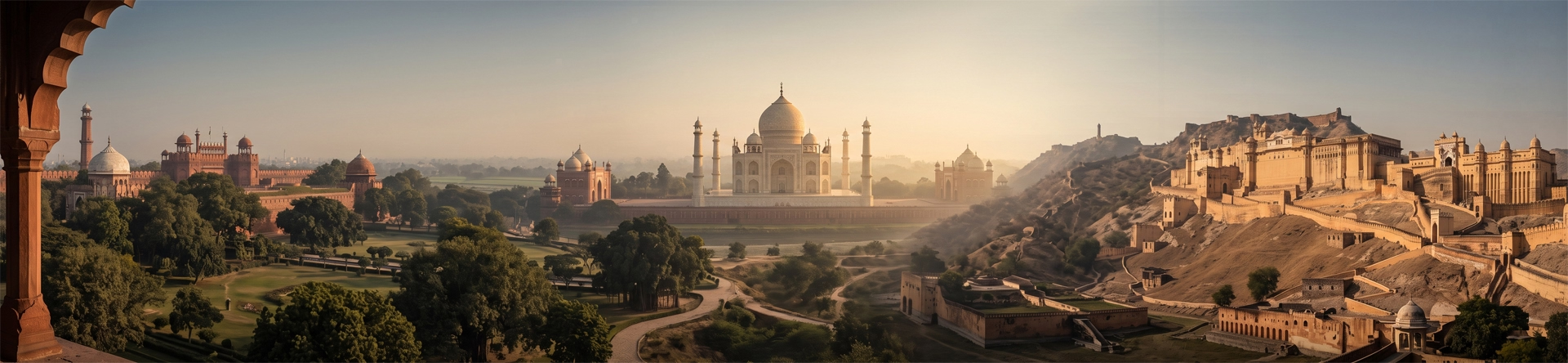
Planning a luxury trip to India often starts with a simple idea: see the Taj Mahal, spend a few nights in Rajasthan, stay in beautiful hotels and travel privately. Once you start looking at the map, however, the choices quickly multiply. Delhi, Agra and Jaipur form the classic Golden Triangle, Ranthambore adds wildlife, Jodhpur and Jaisalmer take you deeper into Rajasthan, Udaipur offers lakes and palace hotels, Varanasi brings a completely different cultural experience, while Kerala and South India can easily justify a separate journey of their own.
The best Luxury India Tours are not the ones with the longest list of cities. They are the ones that combine the right places at the right pace. A well-planned private trip should give you enough time to enjoy the monuments, hotels, food, markets and landscapes without making every day feel like a race between check-in desks.
Private travel works particularly well in India because distances can be deceptive. A city that looks close on a map may still require several hours on the road. Weather can change dramatically between regions, sightseeing days can be intense, and some experiences, such as wildlife safaris, require advance planning. A private chauffeur, carefully selected hotels, local guides and a flexible itinerary can make those practical details much easier to manage.
Why choose a luxury private tour of India?
Luxury travel in India is often associated with palace hotels, premium vehicles and five-star properties. Those things can certainly add comfort, but they are only one part of the experience. The real advantage of a private journey is control over how you travel.
With a private itinerary, your day does not have to follow a large group’s fixed schedule. If you want to begin early for the Taj Mahal, you can. If you would rather spend an extra hour at Amber Fort and shorten a shopping stop later, the schedule can usually be adjusted. If a long drive has left you tired, the following morning can be kept lighter.
This flexibility becomes even more useful on longer journeys. Rajasthan, for example, is perfect for private road travel, but the distances between Jaipur, Jodhpur, Jaisalmer and Udaipur should not be underestimated. A good itinerary takes those journey times into account before deciding how many nights to spend in each city.
A premium India journey should feel comfortable from beginning to end. Good hotels matter, but so do realistic driving times, reliable transport, knowledgeable guides, privacy and enough free time to enjoy where you are.
A private journey also makes it easier to combine very different experiences. You could explore Old Delhi in the morning, visit the Taj Mahal the following day, stay in a Rajasthan palace hotel later in the week and then spend two nights near a national park. When the route is carefully planned, those contrasts become one of the strongest parts of travelling through India.
10 best luxury India tour packages and itineraries
There is no single India itinerary that works for every traveller. Your ideal route depends on the number of days available, whether this is your first visit, how comfortable you are with long drives and what interests you most.
Some visitors want forts, palaces and heritage hotels. Others are more interested in wildlife, food, photography, spirituality or landscapes. These ten private tour ideas give you a practical starting point for building a journey around those interests.
1. Luxury Golden Triangle Tour
Suggested route: Delhi – Agra – Jaipur
Recommended duration: 6–8 days
Best for: First-time visitors, couples, families and travellers with limited time
The Golden Triangle remains the most familiar introduction to northern India because it combines three major destinations without requiring internal flights. Delhi, Agra and Jaipur are very different from one another, which is why the route works so well even on a relatively short trip.
Delhi deserves more than a quick drive between the airport and railway station. Old Delhi offers Jama Masjid, Chandni Chowk, busy markets and layers of Mughal history, while New Delhi has broad avenues, government buildings, Humayun’s Tomb and Qutub Minar.
Many private tours divide Delhi over one or two days. A full day gives you enough time for the major highlights, but two nights can make the beginning of the trip more comfortable, particularly after a long international flight.
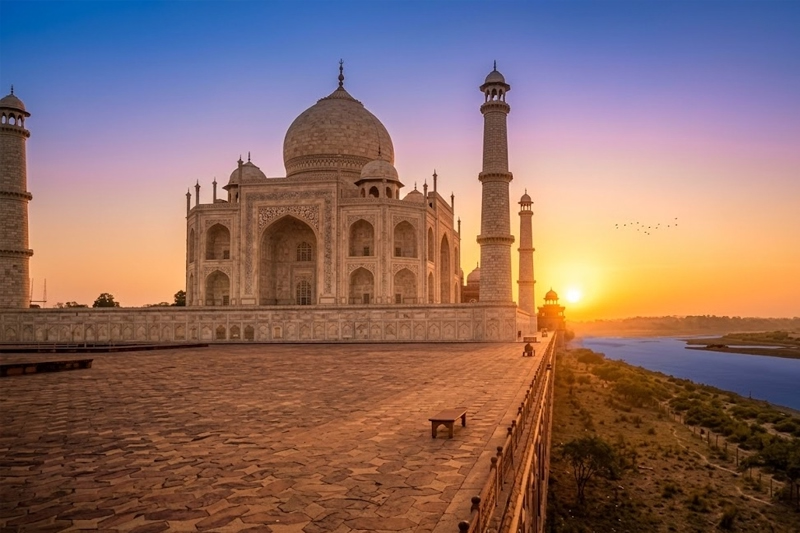
From Delhi, the journey continues to Agra. The Taj Mahal naturally receives most of the attention, but Agra Fort deserves time as well. Visiting both creates a better understanding of the Mughal period than seeing the Taj Mahal in isolation.
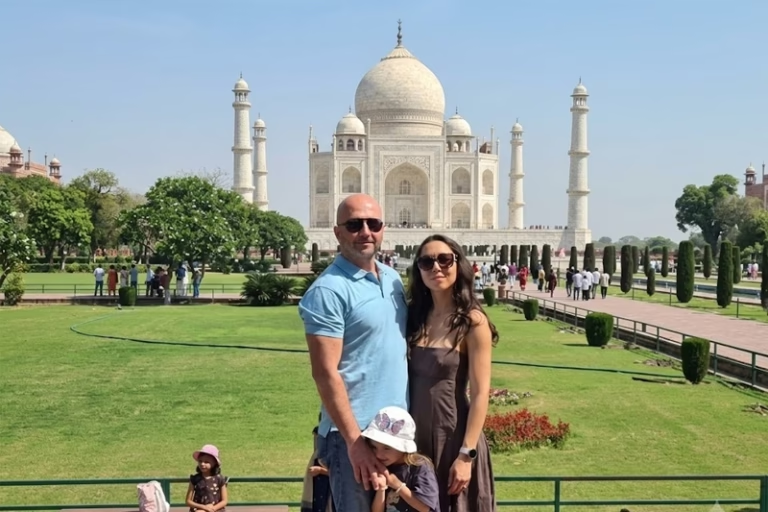
Early morning is a popular time for the Taj Mahal because the light is softer and temperatures can be more comfortable. The monument can still become busy, so arriving prepared and keeping the morning relatively flexible is useful.
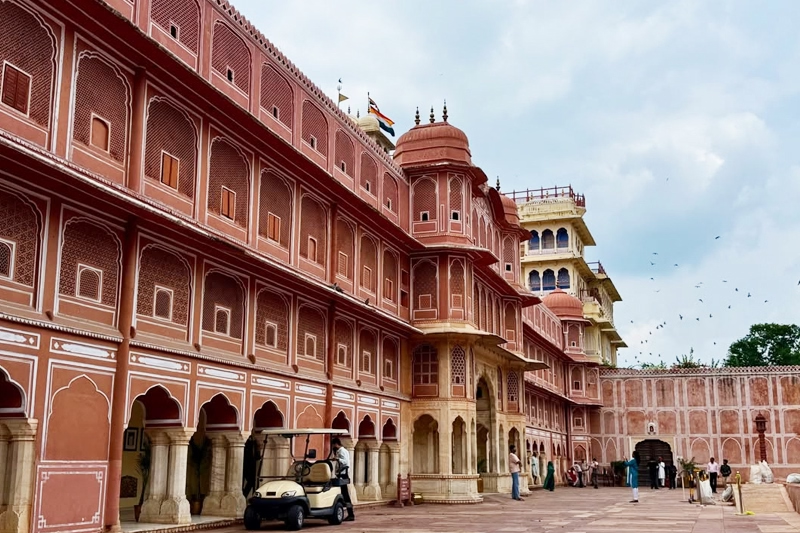
Jaipur introduces Rajasthan on a much larger scale. Amber Fort, City Palace, Jantar Mantar and Hawa Mahal are the major landmarks, but Jaipur’s appeal also lies in its jewellery, textiles, block printing, traditional markets and food.
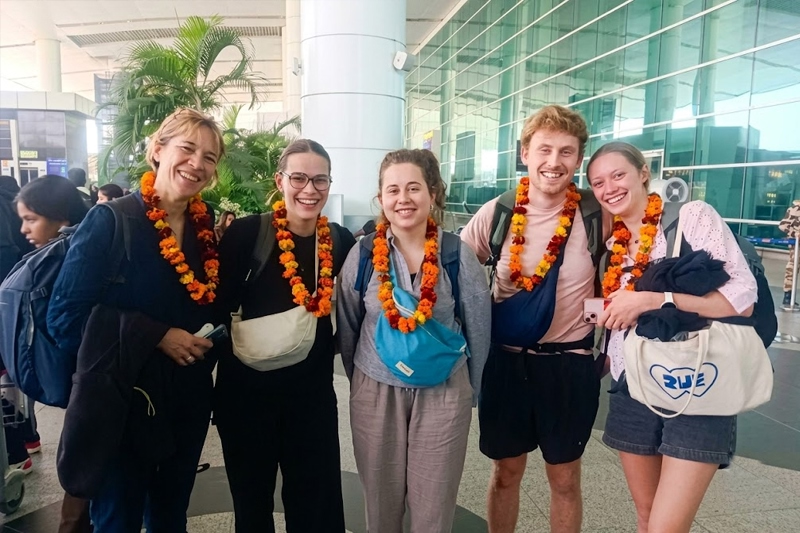
A six-day itinerary is enough for the key sights. Seven or eight days gives the trip a more comfortable rhythm and allows you to spend longer in Delhi or Jaipur.
Related tour: 6 Days Grand Luxury Golden Triangle Tour
You can also consider the 5 Days Classic Luxury Golden Triangle Tour if your time in India is limited.
2. Luxury Golden Triangle with Ranthambore
Suggested route: Delhi – Agra – Ranthambore – Jaipur
Recommended duration: 8–10 days
Best for: Travellers who want history and wildlife in one private journey
Adding Ranthambore changes the character of the Golden Triangle in a useful way. After several days of monuments, traffic and historic cities, the national park introduces open landscapes, forests, lakes and wildlife.
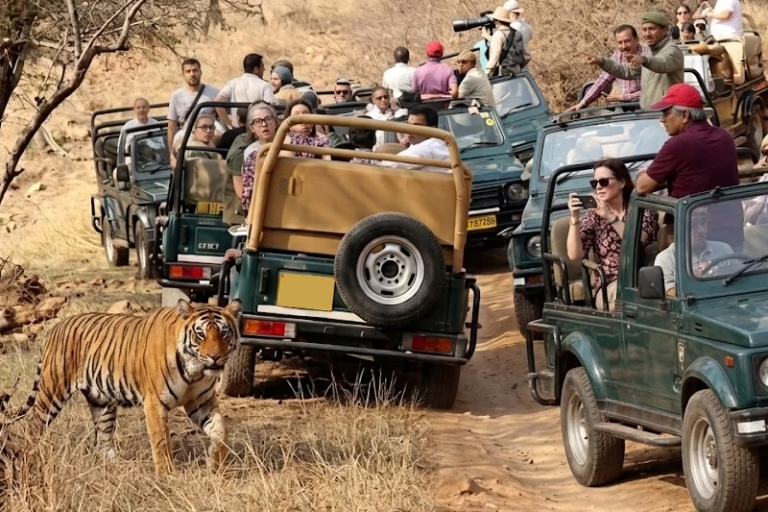
Ranthambore National Park is strongly associated with Bengal tigers, but no responsible wildlife itinerary should promise a tiger sighting. Tigers move freely and every safari is different. Even when a tiger does not appear, the park can offer deer, monkeys, crocodiles, birdlife and impressive scenery around old ruins and lakes.
Two nights is generally much more worthwhile than trying to visit the park as a rushed overnight stop. It gives you time for more than one safari and reduces the pressure on a single game drive.
The park fits conveniently between Agra and Jaipur, although transport arrangements and safari timing should be planned carefully. Wildlife permits can be limited, especially during popular months.
If Ranthambore is important to your journey, check safari availability before finalising every hotel. Safari zones, timings and permits follow park regulations and cannot always be arranged at the last minute.
After Ranthambore, Jaipur returns the journey to forts, palaces and city life. This makes the route particularly good for first-time visitors who want more variety than the standard Golden Triangle.
Explore more about the destination on our Ranthambore travel page.
3. Luxury Rajasthan Tour
Suggested route: Jaipur – Jodhpur – Jaisalmer – Udaipur
Recommended duration: 10–14 days
Best for: Forts, palaces, desert scenery, heritage hotels and photography
Rajasthan is one of India’s strongest regions for private luxury travel. The roads connect a series of historic cities, yet the atmosphere changes noticeably as you travel west and south.
Jaipur works well as the starting point. It has major monuments, good hotel options and convenient connections with Delhi and Agra. Amber Fort sits outside the city centre, while City Palace, Jantar Mantar and Hawa Mahal are closer to the old city.
Two or three nights in Jaipur usually feels more comfortable than trying to fit everything into one sightseeing day. The extra time allows space for markets, crafts, cafés or simply enjoying your hotel.
Jodhpur is visually very different. Mehrangarh Fort rises directly above the old city and is one of Rajasthan’s most impressive fort complexes. The lanes below the fort are also worth exploring, particularly if you enjoy street photography and older neighbourhoods.
From Jodhpur, the route can continue to Jaisalmer. The landscape gradually becomes drier as you move towards the Thar Desert. Jaisalmer Fort remains inhabited, and the sandstone architecture gives the old city a distinctive character.
Desert stays are often included around Jaisalmer, but comfort levels vary widely. If this is meant to be a luxury journey, look carefully at the camp location, room style, privacy, food and facilities rather than choosing on photographs alone.
Udaipur makes a natural final stop. Lake Pichola, City Palace, smaller museums, temples and gardens create a slower atmosphere than Jaipur or Jodhpur.
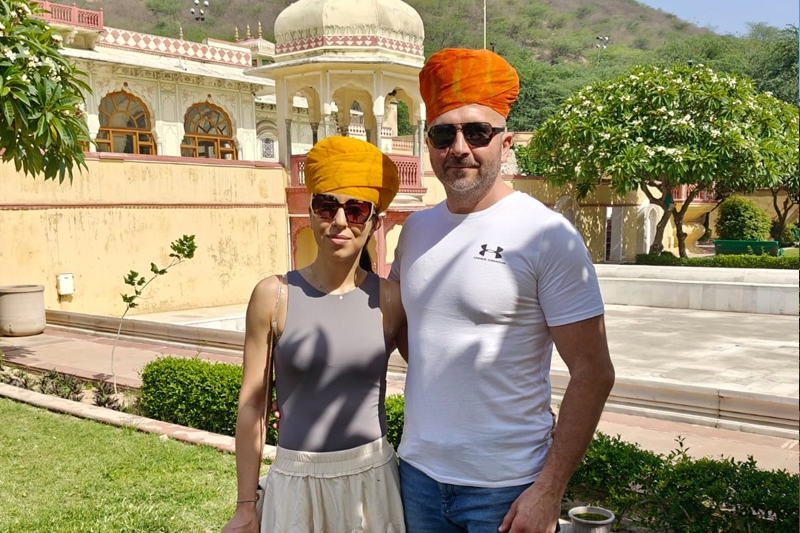
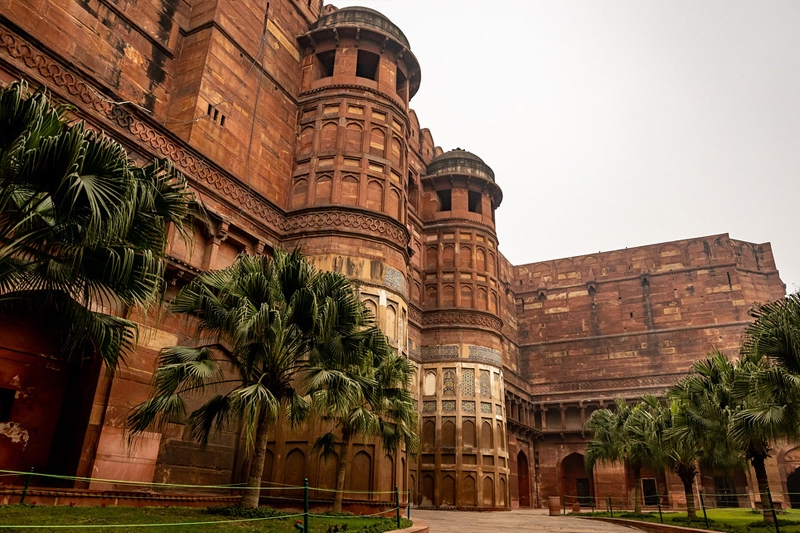
Rajasthan is also where hotel choice can become part of the travel experience. Restored havelis and palace properties often reflect the architecture and history you are exploring during the day.
Related tour: 14 Days Grand Rajasthan Odyssey
4. Luxury Golden Triangle and Rajasthan Tour
Suggested route: Delhi – Agra – Jaipur – Jodhpur – Jaisalmer – Udaipur
Recommended duration: 12–16 days
Best for: First-time travellers with around two weeks in India
This is one of the most complete North India itineraries for travellers who want a combination of famous monuments and deeper Rajasthan travel.
Delhi and Agra introduce Mughal architecture and India’s capital before Jaipur provides the transition into Rajasthan. From Jaipur, the route can continue naturally towards Jodhpur, Jaisalmer and Udaipur.
The biggest advantage of this combination is that the trip develops gradually. You do not need to jump between unrelated regions or take repeated domestic flights.
The biggest disadvantage is the temptation to rush. It is possible to place all these cities into a very short schedule, but that does not mean it will be enjoyable.
A luxury itinerary often improves when one rushed city is removed instead of adding another famous destination.
If you have around 13 to 15 nights, this route can work very well. With less time, consider leaving out Jaisalmer or shortening the Rajasthan section rather than reducing every destination to one night.
Travellers who are particularly interested in wildlife can replace one Rajasthan stop with Ranthambore and create a route combining the Golden Triangle, a tiger reserve and Udaipur.
5. Luxury North India and Varanasi Tour
Suggested route: Delhi – Agra – Jaipur – Varanasi
Recommended duration: 9–12 days
Best for: History, culture, spirituality and photography
Varanasi adds a completely different experience to the Golden Triangle. Delhi, Agra and Jaipur are dominated by forts, tombs, palaces and royal history. Varanasi is a living religious city where everyday routines are closely connected with the Ganges.
An early-morning boat ride is one of the most familiar experiences, but the city deserves more than a single hour on the river. Walking through the old lanes, spending time on the ghats and understanding the religious traditions gives the visit far more depth.
The evening Ganga Aarti attracts both pilgrims and visitors. It can be busy, so having a local guide can help with timing, positioning and understanding what is happening.
Varanasi also requires sensitivity. It is not a staged attraction, and many of the rituals taking place around the river are deeply personal and religious.
For travellers coming from Jaipur or other parts of Rajasthan, a domestic flight is often more practical than travelling the entire distance by road. This is one of the situations where efficient logistics can greatly improve the comfort of the itinerary.
6. Luxury India Wildlife Tour
Suggested route: Delhi – Ranthambore – Bandhavgarh – Kanha
Recommended duration: 10–14 days
Best for: Wildlife enthusiasts, photographers and repeat visitors
A wildlife-focused India tour has a very different rhythm from a city itinerary. Safari drives may begin early, park entry procedures take time and there is no guarantee that animals will appear exactly where you hope.
Ranthambore is one of the easiest reserves to combine with Rajasthan and the Golden Triangle. Bandhavgarh and Kanha require more travel, but they are strong choices for travellers who want a trip built primarily around wildlife rather than monuments.
When designing a safari itinerary, more parks are not always better. Spending two nights in several reserves can create a journey dominated by transfers. Three or four nights in fewer locations may offer a more rewarding experience.
The quality of your lodge also matters. A comfortable property close to the reserve, knowledgeable naturalists and good food can make the hours between safaris as enjoyable as the drives themselves.
Wildlife photography also requires patience. Even when a tiger is sighted, the animal may remain partly hidden or move quickly. Other species, landscapes and behaviour are all part of the safari experience.
No responsible operator should promise a tiger, leopard or other wild-animal sighting. Every safari takes place in a natural environment where wildlife moves freely.
7. Luxury Kerala and South India Tour
Suggested route: Kochi – Munnar – Thekkady – Kumarakom or Alleppey – Kochi
Recommended duration: 9–12 days
Best for: Couples, landscapes, wellness, food and slower travel
South India has a noticeably different rhythm from Delhi and Rajasthan. Kerala in particular suits travellers who want fewer major monuments and more time around landscapes, food, plantation country and waterways.
Kochi provides a useful starting point because its historic areas reflect centuries of maritime trade and cultural exchange. A couple of nights also gives international travellers time to settle into the climate before travelling inland.
Munnar brings cooler hill-country scenery and tea plantations. The road into the hills is winding, so journey time matters more than the distance might suggest.
Thekkady is often included for nature and spice-country experiences before the route continues towards Kerala’s backwaters.
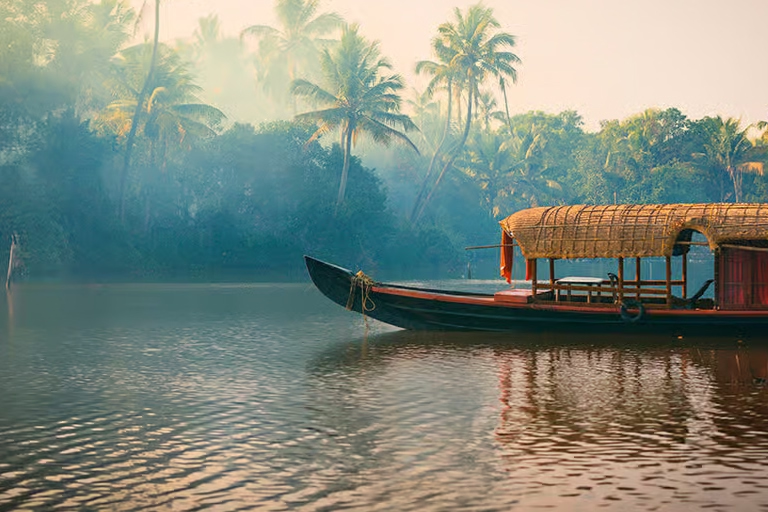
Kumarakom and Alleppey offer different ways to experience the waterways. Some travellers want a private houseboat overnight, while others prefer a comfortable lakeside resort with a shorter cruise.
An overnight houseboat can be memorable, but it is not automatically the most luxurious choice for every traveller. A high-quality resort may offer more space, a swimming pool, spa facilities and a wider range of dining options.
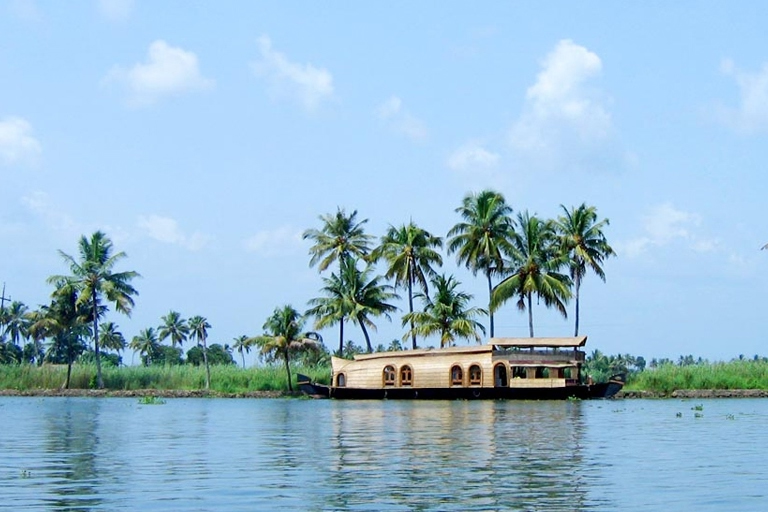
Related tour: 10 Days Grand Private Luxury South India Journey
8. Luxury South India Temple and Heritage Tour
Suggested route: Chennai – Mahabalipuram – Pondicherry – Thanjavur – Madurai
Recommended duration: 9–12 days
Best for: Architecture, temples, regional food and cultural travel
Tamil Nadu offers one of India’s strongest heritage routes for travellers interested in architecture and living religious traditions.
Mahabalipuram combines coastal scenery with historic stone architecture and can be reached from Chennai without a long internal flight. Pondicherry then changes the atmosphere with quieter streets, cafés and a different architectural character.
Further south, Thanjavur and Madurai introduce temple complexes on a completely different scale. The architecture is impressive even before you understand the history, but a knowledgeable local guide can make a major difference.
Temples in South India are not simply historic monuments. Many remain active places of worship, so visitors should dress appropriately and follow local photography and access rules.
The route can continue into Kerala if you have around two weeks. Combining Tamil Nadu’s temple cities with Kerala’s hills and backwaters creates a journey with strong contrasts without requiring constant flights.
9. Luxury Himalayan India Tour
Suggested route: Delhi – Shimla – Dharamshala – Amritsar
Recommended duration: 9–12 days
Best for: Mountain scenery, heritage hotels and slower travel
The Himalayas cover a huge area, so there is no single Himalayan itinerary that works throughout the year. Weather, road access and altitude differ widely between regions.
Shimla is one of the more accessible hill destinations from Delhi and can be combined with heritage stays and slower sightseeing. Dharamshala offers mountain scenery and a different cultural atmosphere.
Amritsar is not a Himalayan hill station, but it works well as part of a northern journey. The Golden Temple is one of India’s most important religious sites and can be a memorable cultural experience when visited respectfully.
Road travel in the hills should never be planned purely by kilometres. Mountain routes can take considerably longer than equivalent distances on major highways.
For that reason, a luxury Himalayan journey should contain fewer stops. Staying two or three nights in a mountain destination allows you to enjoy the views, hotel and surroundings rather than spending every day in a vehicle.
10. Grand Luxury India Tour
Suggested route: Delhi – Agra – Jaipur – Ranthambore – Udaipur – Varanasi – Mumbai – Kerala
Recommended duration: 18–24 days
Best for: Travellers planning a major multi-region India journey
With around three weeks available, it becomes possible to combine several regions without making the journey completely exhausting.
A longer itinerary can begin with Delhi, Agra and Jaipur, continue through Ranthambore and Rajasthan, then use domestic flights to connect with Varanasi, Mumbai or South India.
Flights become increasingly useful once you begin crossing regions. There is little value in spending an entire day driving simply to say that every part of the journey was completed by road.
The most important decision on a three-week trip is what to leave out. India has enough destinations to fill months of travel, so even a long itinerary needs discipline.
Instead of adding another city every day or two, build in slower sections. Two relaxing nights in Udaipur or Kerala can make the rest of the journey feel significantly more comfortable.
Which luxury India tour is best for you?
| Tour | Ideal Duration | Best For | Main Experiences |
|---|---|---|---|
| Golden Triangle | 6–8 days | First trip | Delhi, Taj Mahal, Jaipur |
| Golden Triangle + Ranthambore | 8–10 days | Heritage & wildlife | Forts, monuments, safari |
| Luxury Rajasthan | 10–14 days | Royal heritage | Palaces, desert, forts, lakes |
| Golden Triangle + Rajasthan | 12–16 days | Long first visit | Mughal sites and Rajasthan cities |
| North India + Varanasi | 9–12 days | Culture | Golden Triangle, Ganges, Varanasi |
| India Wildlife | 10–14 days | Nature lovers | National parks and safaris |
| Kerala | 9–12 days | Relaxed travel | Hills, backwaters, wellness |
| South India Heritage | 9–12 days | Architecture | Temples, cuisine, heritage |
| Himalayan India | 9–12 days | Mountains | Hill towns and landscapes |
| Grand India Tour | 18–24 days | Multi-region journey | North India, wildlife and South India |
Best luxury India tour for first-time visitors
If this is your first visit and you have around one week, the Golden Triangle is the most practical choice. Delhi, Agra and Jaipur offer a strong introduction to northern India without requiring complicated logistics.
If you have around ten days, adding Ranthambore gives the trip more variety. The journey still remains geographically manageable while introducing wildlife and rural landscapes between the historic cities.
With around two weeks, you can continue beyond Jaipur into Rajasthan or add Varanasi by air. The best choice depends on whether you prefer forts and palace hotels or spiritual and cultural experiences.
For journeys of 18 days or more, it becomes possible to combine North and South India. Domestic flights are useful for avoiding unnecessary overland travel.
Best time for luxury tours in India
India has several climate zones, so there is no single best month for the entire country. Your ideal travel dates depend on the destinations in your itinerary.
October to March
This is one of the most popular periods for Delhi, Agra and Rajasthan. Daytime temperatures are generally more comfortable for sightseeing, although mornings can become cool during winter.
December and January may also bring fog to parts of northern India, occasionally affecting trains and flights. Peak holiday dates can result in higher hotel rates and limited availability.
April to June
North and Central India become much hotter during these months. Some wildlife travellers still choose the hotter season because animals may gather near water sources, but safari days can be physically demanding in high temperatures.
Hill destinations become increasingly attractive as the plains heat up.
July to September
The monsoon transforms many parts of the country. Rajasthan often becomes greener, while South India experiences heavier rainfall in many areas.
This can be an attractive period for travellers who do not mind occasional rain, but wildlife plans require extra care because many national parks close for part of the monsoon.
Instead of asking for the best month for India as a whole, decide which regions matter most to you and then choose dates that suit those destinations.
How many days do you need for a luxury India tour?
6–8 days: Delhi, Agra and Jaipur.
8–10 days: Golden Triangle with Ranthambore or extra time in Jaipur and Delhi.
10–14 days: Rajasthan, Kerala or Golden Triangle with Varanasi.
14–18 days: Golden Triangle with a wider Rajasthan route or a more detailed South India itinerary.
18–24 days: Two or three regions can be combined using domestic flights.
The important point is not how many cities you can fit into the itinerary. It is how much time remains after hotel check-outs, driving, flights and sightseeing.
What does a private luxury India tour include?
Tour inclusions vary, so always check your confirmed itinerary. Depending on the package, a private journey may include:
- Private air-conditioned vehicle for road travel and sightseeing
- Professional chauffeur
- Airport and hotel transfers
- Private local sightseeing guides
- Selected luxury, boutique or heritage hotels
- Daily breakfast according to the hotel plan
- Pre-arranged sightseeing
- Domestic travel assistance where required
- Safari planning for wildlife itineraries
- Personalised itinerary planning
Before booking, check whether monument entrance tickets, lunches, dinners, domestic flights, train tickets, safari permits and optional activities are included in the quoted price.
Luxury hotels and heritage stays in India
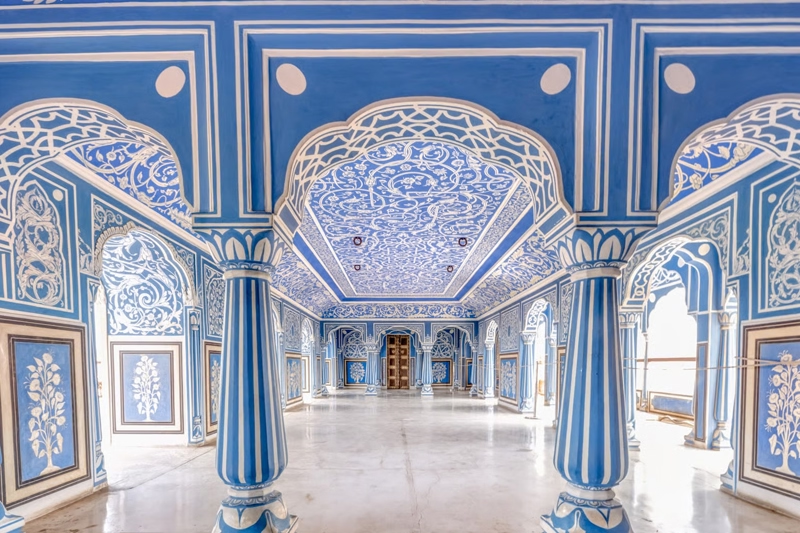
Hotels can become an important part of an India journey, particularly in Rajasthan. Restored havelis, former palaces and heritage properties often provide a sense of place that a standard city hotel cannot.
That does not mean a heritage hotel is always the right choice. In Delhi or Mumbai, a modern luxury property may offer better airport access, larger rooms or more convenient facilities.
Location should always be considered alongside hotel category. A beautiful property far outside Jaipur may be ideal for relaxation but less convenient if you only have one full day for sightseeing.
Wildlife itineraries benefit from lodges with convenient access to safari gates, while Kerala offers plantation retreats, wellness properties and waterside resorts.
Private driver vs group tour in India
An India tour with a private driver is particularly convenient for Delhi, Agra, Jaipur and Rajasthan. You have a dedicated vehicle for road transfers and local travel, and the schedule can usually be adjusted more easily.
A chauffeur and a sightseeing guide perform different roles. The driver handles transport, while a local guide explains history, architecture and cultural context during sightseeing.
Group tours can be suitable for travellers who enjoy meeting other people and prefer a fixed programme. They may also offer a lower per-person cost.
Private tours are generally better for travellers who value privacy, flexibility and a slower or more personalised pace.
How much does a luxury India tour cost?
There is no single reliable price for every luxury India journey because several factors change the final cost.
Hotel category is one of the biggest variables. A five-star city hotel, restored palace and top luxury resort can all fall into very different price ranges.
Season matters as well. Popular properties in Rajasthan may cost significantly more during peak winter dates than in hotter or quieter months.
The type of vehicle, number of travellers, domestic flights, train class, guides, safari permits, special activities and room category all influence the quotation.
Two travellers sharing a room will also have a different per-person price from a solo traveller or family requiring multiple rooms.
For that reason, a customised quotation based on exact dates and preferences is more useful than a broad advertised figure.
How to plan your luxury India itinerary
Start with regions rather than individual monuments. If the Taj Mahal is essential, build the Golden Triangle first. If wildlife matters, add Ranthambore. If royal heritage is the priority, continue through Rajasthan.
Avoid placing too many cities into too few days. The itinerary may look impressive on paper, but repeated early departures and one-night hotel stays quickly become tiring.
- Keep your first day relatively light after an international flight.
- Avoid changing hotels every night.
- Allow realistic road travel times.
- Book popular palace and heritage hotels early during peak season.
- Check wildlife permits before fixing safari dates.
- Use domestic flights when they save a full day of driving.
- Leave some unscheduled time for markets, restaurants or hotel facilities.
- Share dietary and mobility requirements before bookings are confirmed.
Luxury travel should create more time to enjoy the destination, not simply add more destinations to the itinerary.
Why book a tailor-made India tour?
Tailor-made India tours allow the itinerary to reflect the people who are actually travelling.
A couple might want palace hotels, slower evenings and extra time in Udaipur. A family may prefer shorter sightseeing days and hotels with larger rooms or swimming pools.
Senior travellers may value fewer hotel changes, while photographers may prefer early starts and additional time at specific monuments. Wildlife enthusiasts might want several safaris rather than one quick national park visit.
The best private India tours therefore begin with a few simple questions: How much time do you have? Which places matter most? How much driving are you comfortable with? What type of hotel do you enjoy?
Once those answers are clear, the route becomes much easier to design.
Related private India tours
Travel through Delhi, Agra and Jaipur with private transport and a comfortable sightseeing schedule.
View TourA shorter private journey through Delhi, Agra and Jaipur for travellers with limited time.
View TourCombine Delhi, Agra, Jaipur, Jodhpur, Jaisalmer, Udaipur and Ranthambore.
View TourExplore Tamil Nadu and Kerala with heritage cities, hill country and backwaters.
View TourFrequently asked questions about luxury India tours
Start planning your private luxury India tour
The right India itinerary depends less on how many famous places can be included and more on how you want to travel. A seven-day first visit may be perfect for Delhi, Agra and Jaipur. Ten days gives enough time to add wildlife, while two weeks opens the door to a deeper Rajasthan route or a combination with Varanasi.
For longer holidays, North and South India can be combined with carefully chosen domestic flights. The important thing is to keep the journey comfortable and allow each destination enough time to feel different.
Plan a private India journey around your dates and interests.
Tell us how many days you have, which destinations interest you and the type of hotels you prefer. We can help you shape a private itinerary around your travel pace.
Plan Your India Trip